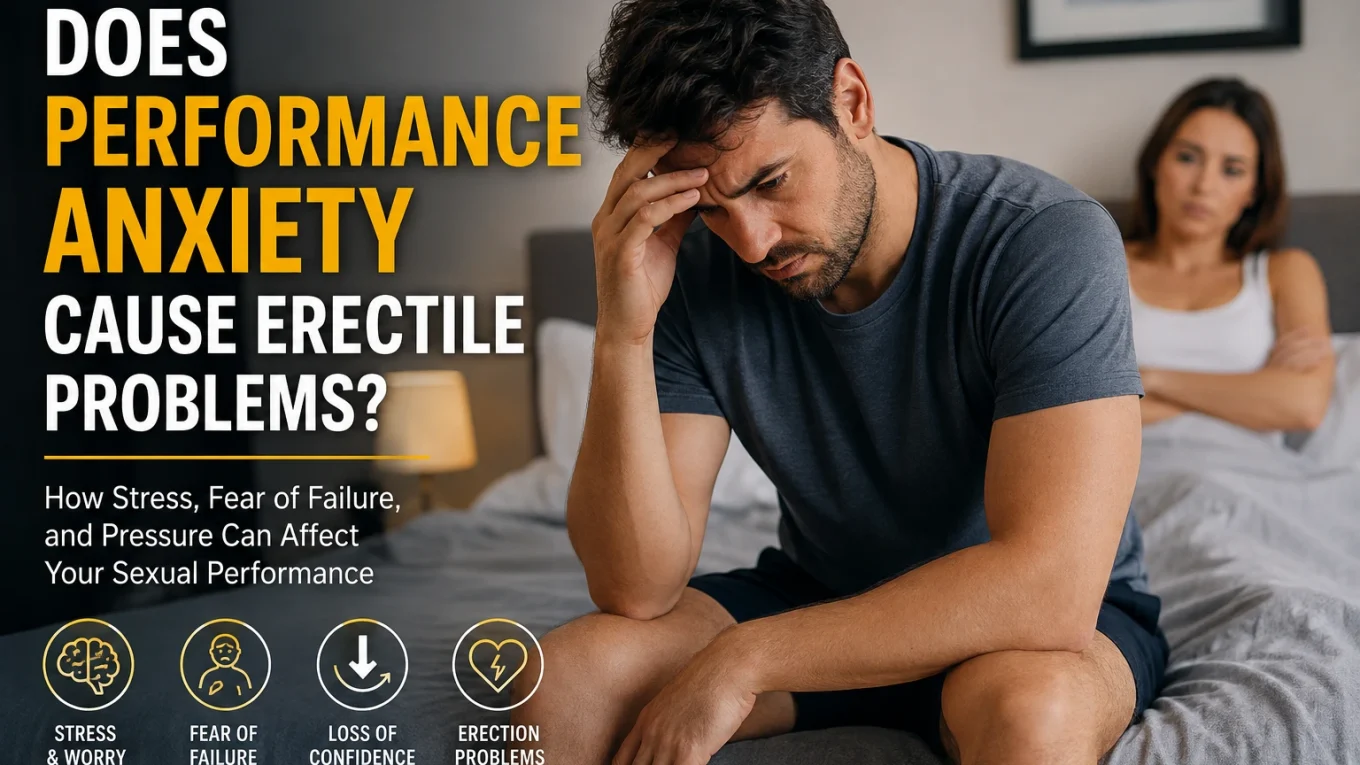
Does Performance Anxiety Cause Erectile Problems? How Stress Can Affect Sexual Performance
What Is Sexual Performance Anxiety?
Sexual performance anxiety is a term often used to describe worry, fear, or pressure related to sexual performance. Instead of feeling relaxed and focused on intimacy, a person may become preoccupied with questions about whether everything will go as expected.
For example, someone may worry about getting an erection, maintaining it, satisfying a partner, lasting long enough, or experiencing the same problem again after a previous disappointing sexual experience.
These thoughts can create a situation where intimacy starts to feel less like a shared experience and more like a test that must be passed.
The more attention shifts toward monitoring performance, the harder it may become to relax and stay mentally present in the moment.
Performance anxiety can affect people differently. Some may experience it only occasionally, while others may notice that worries about sexual performance become increasingly difficult to ignore.
Why Can Performance Anxiety Feel So Powerful?
Sexual response involves both physical and psychological factors. Feeling mentally relaxed and engaged can be part of the conditions that support intimacy, while intense worry may make it harder to focus on arousal.
This does not mean that every erection problem is caused by anxiety. Changes in sexual function can involve many different factors, including physical health, medications, sleep, fatigue, alcohol, lifestyle habits, and other individual circumstances.
However, anxiety may become especially relevant when someone notices that erection difficulties happen mainly during situations where they feel pressured, worried, distracted, or afraid of disappointing their partner.
A previous experience can sometimes make this worse. After losing an erection once, a man may begin worrying that the same thing will happen again. That anticipation can create pressure before intimacy has even started.
Common Thoughts Behind Sexual Performance Anxiety
Performance anxiety does not always feel like obvious panic. Sometimes it appears as a constant stream of self-monitoring thoughts.
Examples may include:
- “What if I cannot get hard?”
- “What if I lose my erection again?”
- “Am I satisfying my partner?”
- “What if something is wrong with me?”
- “Why am I not performing like I used to?”
- “What if my partner notices?”
When these thoughts become the main focus, attention can move away from intimacy and toward evaluating every physical response.
This can make even small changes in erection firmness feel like proof that something is going wrong, which may increase anxiety even further.
Performance Pressure Is Not Always About Physical Ability
Sometimes the pressure comes from expectations rather than a clear physical problem.
A person may believe that they must always be ready for sex, maintain a perfectly firm erection throughout intimacy, or perform in exactly the same way every time.
These expectations can create an unrealistic standard because sexual response naturally varies.
Fatigue, stress, distraction, changing levels of arousal, alcohol, relationship circumstances, and everyday life can all affect how a person feels during intimacy.
One experience that does not go exactly as expected does not automatically define someone’s sexual ability or overall health.
Why Understanding Performance Anxiety Matters
If anxiety is contributing to sexual difficulties, repeatedly searching for a physical “quick fix” may not address the entire situation.
Someone may become trapped in a cycle of checking erection quality, trying one solution after another, and becoming increasingly worried whenever the result is not perfect.
Understanding the possible role of anxiety can help shift the focus away from constant self-testing and toward the broader circumstances surrounding intimacy.
This does not mean assuming that the problem is “all in your head.” Persistent erection difficulties should not be self-diagnosed as anxiety alone.
Instead, it means recognizing that emotional and psychological factors can be relevant alongside physical health and other individual considerations.
The Main Takeaway: Anxiety Can Change the Experience of Intimacy
Sexual performance anxiety involves worry and pressure about how you will perform during intimacy. For some people, these concerns can become so distracting that they interfere with the ability to relax and stay focused on arousal.
At the same time, anxiety is not the only possible reason for erection problems. Physical and lifestyle factors can also be involved.
The most useful approach is to understand the bigger picture rather than automatically blaming either your body or your mind.
Next, we will look more closely at the connection between anxiety and erections, including why stress and intense self-monitoring may affect the ability to get or maintain an erection.
Can Anxiety Affect Your Ability to Get or Maintain an Erection?
Anxiety can affect the circumstances surrounding sexual response, particularly when intense worry makes it difficult to relax or stay mentally engaged during intimacy.
When someone is highly focused on whether they will get an erection or maintain it, their attention may shift away from sexual arousal and toward monitoring performance.
This is one reason why some men report being able to get an erection in certain situations but experiencing more difficulty when they feel pressure, fear, or intense concern about performance.
However, it is important not to assume that anxiety explains every case of erection difficulty. Persistent changes can involve physical health, medications, lifestyle factors, relationship circumstances, or other individual causes.
How Stress Can Change the Conditions for Intimacy
Stress affects more than your thoughts. During stressful periods, you may feel mentally distracted, physically tense, tired, or unable to switch off from everyday worries.
Work pressure, financial concerns, relationship problems, family responsibilities, and other sources of stress can remain in the background even during intimate moments.
If your mind is focused on a problem that feels urgent or threatening, it may be more difficult to feel relaxed and emotionally present.
This does not mean that stress always prevents sexual arousal. People respond differently, and sexual function can vary considerably from one person and situation to another.
But ongoing stress can be an important part of the bigger picture when someone notices changes in desire, confidence, or sexual performance.
How Constant Self-Monitoring Can Increase Pressure
One of the most difficult parts of performance anxiety is the habit of constantly checking yourself.
You may repeatedly ask whether you are hard enough, whether your erection feels different, or whether you are about to lose it.
That kind of self-monitoring can turn attention away from the experience itself and toward a constant evaluation of your body.
If you notice even a small change in firmness, you may become more worried. The increased worry can then make you pay even closer attention, creating additional pressure.
Over time, this can create a frustrating pattern where the fear of an erection problem becomes part of the problem itself.
Getting an Erection and Maintaining It Can Feel Different Under Pressure
Some men experiencing performance anxiety may notice that they can become erect but struggle to maintain the same level of firmness once worry begins.
For example, an erection may develop during initial arousal, but thoughts such as “Will I be able to stay hard?” can suddenly shift attention toward performance.
Other men may feel so nervous before intimacy begins that they find it difficult to become fully aroused in the first place.
These patterns do not prove that anxiety is the only cause. But they show why understanding the circumstances surrounding erection difficulties can sometimes provide useful context.
If you experience a persistent problem, a qualified healthcare professional can help consider both physical and psychological factors rather than assuming one explanation.
Why Erection Problems May Happen in Some Situations but Not Others
Context can matter when anxiety is involved.
A person may feel relatively relaxed when alone but experience difficulty when they feel pressure with a partner. Others may notice problems mainly after a previous negative sexual experience or during particularly stressful periods of life.
Differences between situations can sometimes provide clues about the possible role of psychological pressure, but they should not be used as a self-diagnosis.
Sexual function is influenced by many factors, and the same person can have different experiences depending on fatigue, stress, arousal, health, medications, alcohol, relationship dynamics, and other circumstances.
An Anxiety-Related Problem Is Still a Real Experience
It is important not to dismiss anxiety-related sexual difficulties as something imaginary.
The physical experience of losing an erection or being unable to become erect can be very real, regardless of whether psychological pressure is one of the contributing factors.
Recognizing the possible role of anxiety is not about blaming someone for the problem. It is about understanding that the mind and body are connected and that sexual response does not happen separately from emotions and circumstances.
This broader understanding can be more helpful than trying to divide every erection problem into either “physical” or “psychological.”
The Main Takeaway: Anxiety May Contribute, but It Is Not Always the Only Factor
Anxiety, stress, and intense self-monitoring may make it more difficult for some people to relax and stay engaged during intimacy, which can affect the circumstances surrounding getting or maintaining an erection.
At the same time, persistent erection difficulties should not automatically be blamed on anxiety. Physical health, medications, lifestyle factors, and other circumstances may also deserve attention.
Next, we will examine the performance anxiety cycle and how one difficult sexual experience can sometimes lead to increased worry about the next one.
The Performance Anxiety Cycle: How One Difficult Experience Can Create More Pressure
One of the most frustrating aspects of sexual performance anxiety is that a single difficult experience can sometimes create worry about what will happen next time.
For example, a man may experience difficulty getting or maintaining an erection on one occasion because he is tired, stressed, distracted, or dealing with another temporary factor.
The physical difficulty may only happen once, but the experience can remain in his mind.
Before the next intimate encounter, he may begin thinking about whether the same thing will happen again. Instead of focusing naturally on intimacy, he may start paying close attention to every physical response.
This is where a cycle of anxiety and performance pressure can begin.
How the Cycle Can Start
The pattern can sometimes develop gradually.
A temporary change in erection quality may lead to concern. That concern can then become anticipation before the next sexual experience.
The thought process may look something like this:
- A difficult sexual experience happens.
- You begin worrying about why it happened.
- You become concerned that it will happen again.
- You enter the next intimate situation feeling pressure.
- You start monitoring whether your erection is strong enough.
- Even a small change in firmness increases your anxiety.
- The experience begins to feel like a test of performance.
The result can be a self-reinforcing pattern in which the fear of experiencing a problem again becomes increasingly difficult to ignore.
The Fear of Losing an Erection Can Shift Your Focus
Once someone has experienced difficulty maintaining an erection, it can be easy to become highly aware of any small change during intimacy.
You may begin checking whether your erection feels exactly as firm as it did a few moments earlier. You may also start wondering whether a change in stimulation, position, or distraction means that you are about to lose the erection completely.
This constant checking can shift attention away from arousal and toward evaluating performance.
Instead of being mentally present with your partner, you may find yourself asking whether everything is working correctly.
The more important the erection becomes as a measure of success, the more pressure you may feel when any natural variation occurs.
Why Small Changes Can Suddenly Feel Like a Major Problem
Erection firmness does not necessarily remain identical throughout every intimate experience.
Changes in arousal, stimulation, comfort, attention, fatigue, or other circumstances can affect how sexual response feels from moment to moment.
However, when someone is already anxious, even a small change may be interpreted as a warning sign.
Rather than thinking, “My body is responding differently for a moment,” the person may immediately think, “Here it goes again. Something is wrong.”
That interpretation can create more worry and increase the pressure surrounding the experience.
This is one reason why performance anxiety can sometimes become more persistent after a single disappointing experience.
How a Negative Experience Can Affect Sexual Confidence
Confidence can also be affected when a person begins to associate intimacy with the possibility of failure.
After a difficult experience, someone may start questioning their sexual ability even if they previously had few concerns.
They may compare themselves with how they performed in the past or create unrealistic expectations about how their body should respond every time.
Over time, this can make intimacy feel increasingly high-pressure.
Instead of approaching sex with curiosity, connection, and enjoyment, the person may become focused on proving that everything is working normally.
That pressure can make it harder to break the pattern because each new experience is treated as evidence of whether the problem has been solved.
Trying Too Hard to Control the Result Can Create More Pressure
It is understandable to want certainty after experiencing an erection problem.
You may search for the perfect food, supplement, exercise, technique, or routine that guarantees you will perform exactly as expected.
However, sexual response is not always something that can be controlled with complete precision.
The attempt to guarantee a specific outcome can sometimes create additional pressure because every intimate experience becomes a test of whether the chosen solution worked.
A more realistic approach is to focus on the broader conditions that support well-being and intimacy rather than demanding perfect performance every time.
Breaking the Cycle Often Starts With Recognizing the Pattern
Recognizing a possible anxiety cycle does not mean assuming that the problem is entirely psychological.
Persistent changes in erection quality can have different causes, and physical health should not be ignored.
But if you notice that your main difficulty begins after worrying about a previous experience, recognizing the role of performance pressure may help you understand why the problem feels increasingly difficult to escape.
The goal is not to blame yourself for feeling anxious.
Instead, it is to stop treating every intimate experience as a pass-or-fail test and begin looking at the broader emotional and physical circumstances involved.
The Main Takeaway: Fear of the Problem Can Sometimes Help Maintain the Pressure
A single disappointing sexual experience can sometimes lead to worry about the next one. That worry may encourage constant self-monitoring, increase pressure, and make intimacy feel like a performance test.
For some people, this creates a cycle in which concern about erection quality becomes increasingly connected to the sexual experience itself.
Recognizing this pattern is an important step, but persistent erection difficulties should still be considered in the context of overall physical and emotional health.
Next, we will look at some of the most common triggers behind sexual performance anxiety, including stress, relationship pressure, unrealistic expectations, and fear of disappointing a partner.
Common Triggers of Sexual Performance Anxiety
Sexual performance anxiety can develop for different reasons, and the triggers are not always obvious.
For some men, the pressure begins after one difficult sexual experience. For others, anxiety may be connected to stress, relationship concerns, unrealistic expectations, body image worries, or fear of disappointing a partner.
Understanding possible triggers does not mean trying to diagnose yourself. It simply helps explain why sexual confidence can change depending on what is happening in your life and how you feel before intimacy.
In many cases, several factors may exist at the same time.
Everyday Stress Can Follow You Into the Bedroom
Stress from everyday life does not always disappear when intimacy begins.
Work deadlines, financial concerns, family responsibilities, relationship difficulties, and other pressures can leave your mind feeling busy even when you want to relax.
When you are mentally preoccupied, it may be harder to feel present and focused on intimacy. You may find yourself thinking about problems from earlier in the day instead of engaging naturally with your partner.
This does not mean that stress automatically causes erection problems. People respond differently, and sexual function can be influenced by many physical and psychological factors.
However, if you notice that erection difficulties appear more often during particularly stressful periods, that pattern may be worth paying attention to.
The Fear of “Failing” Can Create Its Own Pressure
One of the strongest triggers of performance anxiety is the fear that something will go wrong.
A man may worry that he will not get an erection, that he will lose it too quickly, or that his partner will be disappointed.
Once these worries become the focus, intimacy can begin to feel like a situation where there is only one acceptable outcome.
This can create a difficult mindset because sexual response naturally varies. An erection does not have to behave in exactly the same way during every intimate experience for someone to be considered sexually capable.
When every small variation is interpreted as failure, the pressure surrounding intimacy can become much stronger.
Feeling Responsible for Your Partner’s Satisfaction
Wanting to satisfy your partner is a normal part of intimacy, but it can become stressful when you feel personally responsible for making every experience perfect.
Some men begin to believe that their erection, stamina, or sexual performance is the only measure of whether their partner is happy.
That belief can place an enormous amount of pressure on one physical response.
Intimacy usually involves communication, emotional connection, comfort, mutual preferences, and many other factors. Treating erection firmness as the only measure of success can make performance anxiety worse.
If you are worried about your partner’s expectations, open and supportive communication may sometimes reduce uncertainty rather than allowing assumptions to create additional pressure.
Unrealistic Expectations About Sexual Performance
Many people develop unrealistic expectations about how sex is supposed to look or how the body should respond.
You may believe that you should always be ready for sex, become fully aroused immediately, maintain the same erection firmness throughout intimacy, and never experience any variation.
These expectations leave little room for normal human differences.
Fatigue, stress, distraction, changing levels of arousal, alcohol, health, and everyday circumstances can all influence sexual response.
Comparing yourself to an unrealistic standard can turn ordinary variation into a source of anxiety.
A more realistic perspective allows room for sexual experiences to differ without automatically viewing every change as evidence of a serious problem.
A Previous Negative Experience Can Become a Trigger
Sometimes the biggest source of pressure is simply remembering what happened before.
After losing an erection or struggling to become fully aroused once, you may begin anticipating the same outcome during the next intimate experience.
You may enter the situation already watching for signs that something is going wrong.
This anticipation can create pressure before any actual difficulty occurs.
Over time, the previous experience may become more powerful in your mind than the original circumstances that contributed to it, especially if you repeatedly interpret it as proof that something is permanently wrong.
Relationship Pressure and Communication Concerns
Relationship concerns can also affect how relaxed someone feels during intimacy.
Arguments, unresolved tension, fear of judgment, communication problems, or concerns about disappointing a partner can all contribute to emotional pressure.
This does not mean that every relationship problem directly causes erection difficulties.
But intimacy does not happen separately from the emotional environment of a relationship.
Feeling safe, understood, and able to communicate openly may help reduce some of the uncertainty that contributes to performance pressure.
Body Image and Sexual Self-Confidence
Concerns about appearance can also become a source of self-monitoring during intimacy.
Someone who feels uncomfortable about their body may spend more time worrying about how they look than focusing on how they feel.
This can create another layer of pressure, particularly when self-conscious thoughts become difficult to switch off.
Again, this does not mean body image concerns explain every sexual difficulty. But confidence and emotional comfort can influence the overall experience of intimacy.
More Than One Trigger Can Be Involved at the Same Time
Performance anxiety is not always caused by one single event.
You may be tired from work, dealing with financial stress, worried about a previous sexual experience, and concerned about satisfying your partner at the same time.
When several sources of pressure overlap, it can become difficult to identify one simple explanation for changes in sexual performance.
This is why it is often more helpful to look at the broader pattern rather than searching for one factor to blame.
The Main Takeaway: Pressure Can Come From Many Different Directions
Stress, fear of failure, unrealistic expectations, relationship concerns, body image worries, and previous negative experiences can all contribute to performance pressure for some people.
Recognizing possible triggers may help you better understand the circumstances surrounding sexual anxiety, but it should not be used to automatically dismiss persistent erection problems as purely psychological.
In the next part, we will look at practical ways to reduce unnecessary pressure during intimacy and shift the focus away from constant performance monitoring.
Looking for Additional Support for Sexual Performance?
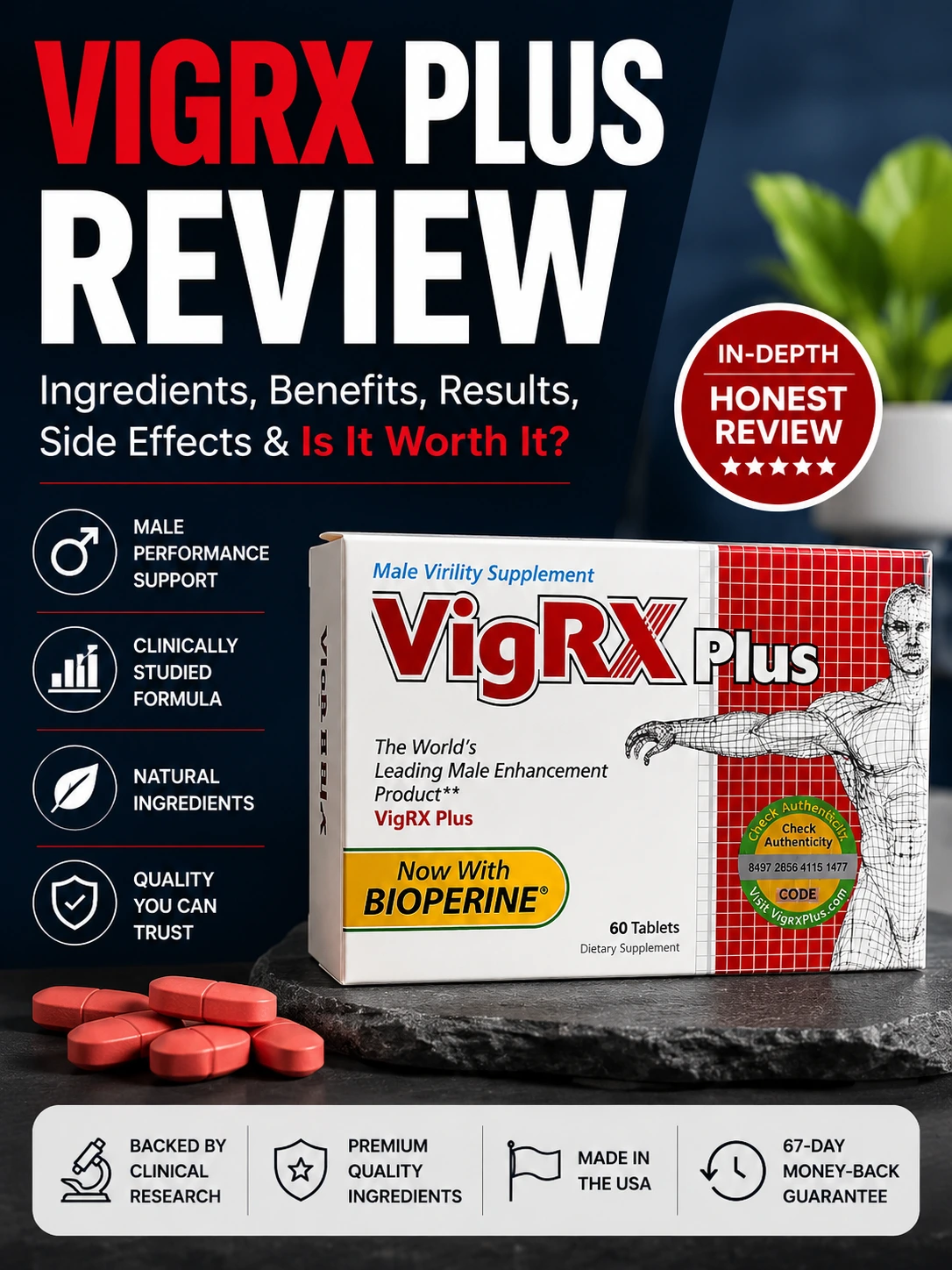
Performance anxiety can involve both emotional pressure and the broader circumstances surrounding sexual wellness. Alongside healthy lifestyle habits and realistic expectations, some men choose to research supplements designed to support male sexual performance. Learn more about VigRX Plus and review the official product information before deciding whether it may be worth considering.
How to Reduce Pressure During Intimacy
When performance anxiety becomes part of your sexual experience, trying harder to control every outcome may sometimes create even more pressure.
A more helpful starting point can be to shift your attention away from constantly asking whether you are performing well enough and toward the broader experience of intimacy.
This does not mean ignoring persistent erection difficulties. Instead, it means recognizing that treating every sexual experience as a pass-or-fail test may make anxiety more difficult to manage.
Stop Treating Every Sexual Experience Like a Test
After experiencing difficulty getting or maintaining an erection, it can be tempting to use the next intimate encounter as a test.
You may enter the situation thinking that a firm erection will prove everything is normal, while any change in firmness will prove that something is wrong.
This creates a very narrow definition of success.
Sexual response can vary, and intimacy involves more than one physical outcome. The more every experience becomes a test of whether your body performs perfectly, the easier it can be for anxiety to take over.
Try to avoid judging the entire experience based on one moment or one change in erection firmness.
Shift Your Focus Away From Constant Self-Monitoring
Performance anxiety often encourages people to repeatedly check their body.
You may mentally ask whether you are hard enough, whether you are staying hard, or whether your partner has noticed a change.
While these thoughts are understandable, constant monitoring can keep your attention focused on evaluation instead of connection and arousal.
When you notice yourself repeatedly checking your performance, try to gently shift your attention back to the present experience.
There is no need to force yourself to stop every thought completely. Simply recognizing when your attention has become trapped in self-monitoring may help you step away from the pattern.
Allow Room for Natural Variation
One source of performance pressure is the expectation that sexual response should remain exactly the same from beginning to end.
In reality, levels of arousal and erection firmness can change during intimacy.
A temporary change does not automatically mean that the entire experience is failing or that something is permanently wrong.
Allowing room for natural variation may help reduce the tendency to interpret every small change as a warning sign.
This does not mean dismissing persistent difficulties. It simply means avoiding the assumption that every moment must be physically identical for intimacy to be successful.
Slow Down and Reduce the Feeling of Rushing
Feeling rushed can add another layer of pressure.
If intimacy feels like something that must happen quickly or follow a specific sequence, there may be less opportunity to relax and feel mentally present.
Giving yourself and your partner more time can reduce the sense that every moment must produce an immediate result.
There is no universal pace that works for everyone. The goal is simply to create an environment where intimacy feels less like a task and more like a shared experience.
Open Communication Can Reduce Unnecessary Assumptions
Some performance anxiety comes from assumptions about what a partner is thinking or expecting.
You may worry that your partner will judge you, feel disappointed, or interpret a temporary erection change as a sign of something much bigger.
In some relationships, honest and supportive communication can reduce uncertainty.
You do not need to turn every intimate moment into a serious discussion. However, being able to communicate openly about pressure, expectations, and concerns may help prevent assumptions from becoming additional sources of anxiety.
A supportive partner may also help create an environment where intimacy feels less focused on proving performance.
Avoid Chasing Perfect Sexual Performance
The idea of perfect sexual performance can become a difficult standard to maintain because there is no single experience that looks exactly the same for everyone.
Fatigue, stress, mood, relationship circumstances, arousal, and everyday life can all influence how intimacy feels.
Trying to guarantee the same result every time may create more pressure than it removes.
A healthier approach may be to focus on comfort, communication, connection, and overall sexual well-being instead of demanding perfection from every experience.
The Main Takeaway: Less Pressure Can Create More Room to Relax
Reducing performance anxiety does not mean ignoring your concerns or pretending that persistent erection difficulties do not matter.
It means stepping away from the cycle of constant self-testing and allowing intimacy to be more than a measurement of sexual performance.
Shifting attention away from monitoring, allowing for natural variation, slowing down, and communicating openly may help reduce unnecessary pressure for some people.
Next, we will look at how lifestyle habits, sleep, recovery, and stress management can support the broader foundation of sexual and emotional well-being.
Lifestyle, Sleep, and Stress Management: Supporting the Bigger Picture
Sexual performance anxiety does not exist separately from the rest of your life.
Long working hours, poor sleep, ongoing stress, exhaustion, limited physical activity, and other lifestyle pressures can affect your overall energy, mood, and sense of well-being.
Improving these areas may not provide an instant answer to every erection concern, but they can help create a stronger foundation for both physical and emotional health.
Why Better Sleep Can Matter
Poor sleep can leave you feeling tired, mentally distracted, irritable, or less able to cope with everyday pressure.
When lack of sleep becomes a regular pattern, stress may feel harder to manage and physical recovery may also be affected.
These changes can influence the broader circumstances surrounding intimacy.
One poor night’s sleep does not automatically explain an erection problem. However, if you regularly sacrifice sleep, improving your sleep routine may be one useful part of supporting your overall well-being.
Focus on habits that you can maintain consistently rather than expecting one night of perfect sleep to create a dramatic change.
Fatigue Can Affect Energy and Sexual Confidence
Physical and mental exhaustion can change how you feel about intimacy.
After a demanding day or a long period without adequate recovery, you may have less energy, feel more distracted, or become more sensitive to small changes in your sexual response.
For someone already worried about performance, fatigue can also make it easier to interpret a temporary change as proof that something is wrong.
Paying attention to rest and recovery can therefore be part of reducing the broader conditions that contribute to pressure.
Regular Physical Activity May Support Overall Well-Being
Regular physical activity can support general health, cardiovascular fitness, mood, and stress management.
You do not necessarily need an extreme training routine. Walking, cycling, swimming, strength training, or other forms of regular movement may be easier to maintain as part of everyday life.
The goal is not to treat exercise as a guaranteed treatment for sexual performance anxiety.
Instead, physical activity can be one part of a broader routine that supports general health and may help some people manage stress more effectively.
Find Realistic Ways to Manage Everyday Stress
There is no single stress-management technique that works for everyone.
Some people benefit from regular exercise, while others may find that spending time outdoors, practicing relaxation techniques, reducing unnecessary commitments, or setting aside time away from work helps them feel more balanced.
The most important factor is often consistency.
If stress has become a constant part of your daily life, look for realistic changes that you can continue rather than adding another complicated routine that becomes a new source of pressure.
Small improvements in how you manage daily demands may be more sustainable than searching for a perfect solution.
Consider the Role of Alcohol and Smoking
Alcohol and smoking can also be relevant to overall health and sexual wellness.
Some people notice changes in sexual response after drinking, particularly when alcohol consumption is heavier than usual.
If you regularly smoke, reducing or stopping smoking can support broader health goals.
These changes should not be viewed as guaranteed solutions to anxiety or erection difficulties, but they may be worthwhile as part of a healthier overall lifestyle.
Build a Routine You Can Actually Maintain
When trying to improve sexual confidence, it can be tempting to change everything at once.
You might decide to exercise every day, completely redesign your diet, take multiple supplements, stop every unhealthy habit immediately, and monitor every result.
For some people, this approach creates even more pressure.
A more sustainable strategy is to identify a few realistic areas for improvement and build consistency gradually.
For example, you might start by improving your sleep schedule, adding regular walks, reducing excessive alcohol, or creating more time to decompress after stressful days.
Long-term habits are generally more valuable than short periods of extreme effort followed by burnout.
Where Do Supplements Fit Into the Bigger Picture?
Some men choose to research supplements marketed for male sexual performance as part of their broader approach to sexual wellness.
If you decide to explore this option, it is important to maintain realistic expectations and review product information carefully.
A supplement should not automatically be viewed as a guaranteed answer to performance anxiety or every possible cause of erection difficulty.
Consider the ingredients, directions for use, precautions, your individual health circumstances, and any medications you take.
If you are specifically researching VigRX Plus, you can also read our complete VigRX Plus Review for more information about the product.
The Main Takeaway: Support Your Overall Health Without Chasing a Quick Fix
Sleep, recovery, regular physical activity, stress management, and sustainable lifestyle habits can all contribute to your broader physical and emotional well-being.
These changes may also help reduce some of the everyday pressures that can make sexual performance anxiety feel more difficult to manage.
However, lifestyle changes and supplements cannot identify or address every possible reason for persistent erection difficulties.
Next, we will look at when erection problems may involve more than anxiety and why persistent changes deserve attention rather than automatic self-diagnosis.
When Erection Problems May Involve More Than Anxiety
Performance anxiety can be one factor that affects sexual experiences, but it should not automatically be assumed to explain every difficulty getting or maintaining an erection.
Erection quality can be influenced by many different physical, psychological, lifestyle, and relationship-related factors. In some cases, more than one factor may be involved at the same time.
This is why it can be helpful to look at the broader pattern rather than immediately deciding that the problem is caused entirely by stress or anxiety.
Persistent Changes in Erection Quality Deserve Attention
An occasional difficulty with getting or maintaining an erection can happen for many reasons. Fatigue, stress, alcohol, distraction, illness, and changing levels of arousal can all affect an individual experience.
However, if you notice that erection difficulties have become persistent, increasingly frequent, or clearly different from your usual sexual function, it may be worth discussing the situation with a qualified healthcare professional.
The purpose is not to assume that something serious is necessarily wrong. It is to move beyond guesswork and consider your individual circumstances more carefully.
Look for the Bigger Pattern Instead of Diagnosing Yourself From One Experience
One difficult sexual experience does not provide enough information to explain why a change happened.
Try to consider whether the difficulty occurs only occasionally or has become a repeated pattern. You may also notice whether it appears mainly during stressful periods, after drinking alcohol, when you are extremely tired, or in particular relationship circumstances.
Looking at patterns can provide useful context, but it is not a replacement for professional evaluation.
Sexual function is individual, and the same symptom can have different contributing factors for different people.
Physical Health Can Also Be Relevant
Sexual function is connected to broader aspects of physical health.
Factors involving cardiovascular health, lifestyle habits, medications, sleep, fatigue, and other individual health circumstances may all be relevant when considering persistent changes in erection quality.
This does not mean that every erection problem points to one specific physical cause. It simply means that anxiety should not be used to dismiss other possible factors without appropriate consideration.
A qualified healthcare professional can evaluate your individual circumstances in a way that a general online article cannot.
Consider Whether Medication Changes May Be Relevant
If you noticed a change in sexual function after starting, stopping, or changing a medication, consider the timing and discuss it with an appropriate healthcare professional.
Some medications may affect sexual function for some people, but you should not assume that a medication is responsible without professional advice.
Do not stop taking prescribed medication on your own because you believe it may be affecting your erections.
The healthcare professional responsible for your care can consider your individual situation and discuss appropriate options.
Pay Attention to Other Changes in Your General Well-Being
If changes in erection quality occur alongside other persistent changes in how you feel, it may be useful to consider your overall health rather than focusing only on sexual performance.
For example, persistent changes in energy, sleep, sexual desire, mood, or general physical well-being may provide additional context worth discussing with a qualified healthcare professional.
These changes do not automatically identify one specific cause. They simply reinforce the importance of looking at the bigger picture when something has changed over time.
Anxiety and Physical Factors Can Overlap
It is not always necessary to choose between a completely physical explanation and a completely psychological explanation.
A temporary physical change may create anxiety, and that anxiety may then add additional pressure during future intimate experiences.
Likewise, someone experiencing ongoing stress may also have lifestyle or health factors that affect their overall well-being.
Recognizing that several factors can overlap may be more useful than searching for one simple explanation for every experience.
When Should You Consider Seeking Professional Advice?
Consider speaking with a qualified healthcare professional if erection difficulties are persistent, becoming more frequent, noticeably different from your usual sexual function, or causing significant concern.
Professional advice may also be useful if you are unsure whether medications, lifestyle factors, stress, or another health issue could be contributing to the change.
Seeking advice is not a sign of failure. It can simply be a practical way to better understand what may be affecting your individual situation.
The Main Takeaway: Don’t Automatically Assume Anxiety Is the Only Explanation
Performance anxiety may contribute to erection difficulties for some people, especially when worry, fear of failure, and constant self-monitoring create additional pressure during intimacy.
But persistent changes in erection quality can involve many different factors, including physical health, medications, lifestyle, and individual circumstances.
The most balanced approach is to recognize the possible role of anxiety without using it as a reason to ignore persistent concerns.
Next, we will answer some common questions about performance anxiety and erectile problems and summarize the most important points from this guide.
Frequently Asked Questions About Performance Anxiety and Erection Problems
Can performance anxiety cause erection problems?
Performance anxiety may contribute to difficulty getting or maintaining an erection for some people. Worry, fear of failure, and constant self-monitoring can make it harder to relax and stay mentally engaged during intimacy. However, anxiety does not explain every case of erection difficulty, and persistent problems may involve other physical or lifestyle factors.
Can anxiety make you lose an erection?
For some people, intense anxiety during intimacy may affect the circumstances surrounding sexual arousal and make it more difficult to maintain an erection. A temporary change in firmness can then create more worry, potentially increasing performance pressure. Persistent erection difficulties should not automatically be self-diagnosed as anxiety alone.
Why can I get an erection but lose it when I start worrying?
When attention shifts from arousal and intimacy toward worrying about performance, some people may become increasingly focused on monitoring their erection. The fear of losing it can create additional pressure. However, different factors may also affect the ability to maintain an erection, so a persistent pattern may deserve professional evaluation.
How do I stop worrying about losing my erection?
It may help to recognize when intimacy has started to feel like a performance test. Shifting attention away from constant self-monitoring, allowing room for natural variation, slowing down, and communicating openly with your partner may help reduce unnecessary pressure. If anxiety remains persistent or significantly affects your life, consider discussing it with a qualified healthcare professional.
Can stress cause temporary erection problems?
Stress can affect energy, mood, mental focus, and the ability to feel relaxed. For some people, stressful periods may also coincide with changes in sexual confidence or performance. However, stress is not the only possible explanation for erection difficulties.
Can poor sleep make performance anxiety worse?
Poor sleep can contribute to fatigue, irritability, reduced energy, and difficulty managing everyday stress. These factors may make it harder to feel relaxed and emotionally present during intimacy. Improving sleep can support overall well-being, although it does not guarantee a specific change in sexual performance.
Can supplements help with sexual performance anxiety?
Some men choose to research supplements marketed for male sexual performance as part of their broader approach to sexual wellness. However, supplements should not be viewed as a guaranteed solution for performance anxiety or every possible cause of erection difficulty. It is important to review ingredients, directions, precautions, and your individual circumstances before deciding whether a product is appropriate for you.
When should I see a doctor about erection problems?
Consider speaking with a qualified healthcare professional if erection difficulties become persistent, increasingly frequent, clearly different from your usual sexual function, or cause significant concern. Professional advice may also be useful if you are unsure whether medications, stress, lifestyle factors, or another health issue may be contributing.
Final Thoughts: Reducing Pressure Starts With Looking Beyond Performance
Sexual performance anxiety can create a difficult cycle. One disappointing experience may lead to worry about the next one, and that worry can turn intimacy into a constant test of whether everything is working correctly.
Stress, fear of failure, unrealistic expectations, relationship pressure, and previous negative experiences may all contribute to this cycle for some people.
Breaking the pattern does not necessarily mean finding one instant solution. A more balanced approach may involve reducing unnecessary self-monitoring, allowing room for natural variation, communicating openly, managing everyday stress, getting adequate rest, and supporting your broader physical and emotional well-being.
At the same time, do not automatically assume that every erection difficulty is caused by anxiety. Persistent changes can involve physical health, medications, lifestyle factors, or other individual circumstances.
If you choose to research supplements as part of your broader approach to male sexual wellness, maintain realistic expectations and review the available product information carefully. You can learn more about one option in our complete VigRX Plus Review.
The most important goal is not to demand perfect performance from every intimate experience. It is to understand the bigger picture, reduce unnecessary pressure where possible, and seek appropriate advice when persistent concerns deserve closer attention.